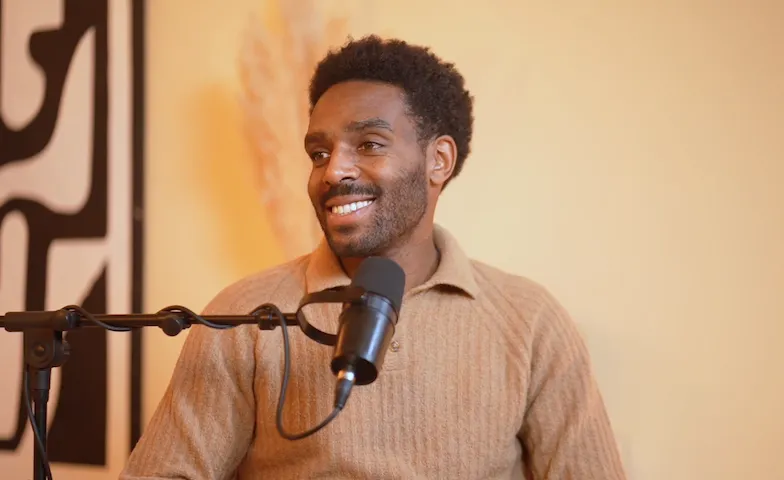

Matthieu Birach is Chief People Officer at Doctolib. He joined the company in 2016 and supported an exceptional growth journey, from 100 to over 3,000 employees, in a context of sustained hypergrowth.
Matthieu began his career in M&A at Rothschild & Co, before taking on a General Manager role at FoodTech startup Take Eat Easy, and later joining Doctolib as International Director. This path led him to defend a clear and radical vision: HR is not a support function, but a key driver of strategy execution. He explains how, at Doctolib, people-related topics are embedded at the heart of strategic decisions (international expansion, country structuring, go-to-market), because executing a vision ultimately depends on the ability to build the right team and help it grow.
People at the heart of business strategy
“People is not a support function. It’s a business acceleration and transformation function.”
Across his different roles, Matthieu reached the same conclusion early on: when a company is launching or scaling up, the most critical challenges are human ones. While scaling Take Eat Easy in France, he spent nearly 90% of his time on People topics. When he joined Doctolib to support the launch in Germany, the logic was the same: most of his time went into hiring, training teams, and structuring the local organization.
These experiences shaped his view of the People function — a vision that resonated strongly with Doctolib’s culture, where People has always been considered a central strategic lever.
Key takeaways:
- People becomes a business topic as soon as it is treated as an operational priority: the amount of time a leader dedicates to hiring is a key KPI for managing a fast-growing business. Matthieu believes it should represent between one and two days per week.
- Hiring is not enough — the People function must be nurtured: structured onboarding processes, continuous training (for both talents and managers), and skill development are just as critical as hiring itself, especially in hypergrowth environments where everything moves fast. “You need to overinvest in training.”
- Hiring highly demanding profiles requires real preparation: to attract talents with a strong entrepreneurial mindset, “Doctolib invested very early in an experienced recruitment team, with the conviction that this required time and resources.”
Hiring: a matter of intention, but also of method
“Founders are often good recruiters because they bring intensity. But they forget structure. And both are necessary.”
For Matthieu, hiring cannot be treated as a permanent emergency. It’s not a magic solution — it’s a structured discipline that requires preparation and consistency.
His approach follows a three-step plan:
- Do the job before hiring for it: To hire effectively and truly understand the problem you’re trying to solve, “you need to do the job. Before hiring a salesperson, you need to sell. When you do that, you understand the product and the sales cycle. You have to do the job — or at least be very close to it.”
- Clearly define what success looks like: Concretely, asking the question: “In six or nine months, what should have happened in the company if I hired the right person?” This helps validate the need, clarify the expected impact, define the level of seniority required, and better sell the role to candidates.
- Translate this into a structured set of interview questions — and stick to it: In recruitment, you should always ask the same questions and be systematic. This enables benchmarking across candidates and helps reduce instinctive or cultural bias.
Diversity as a performance lever
“Diversity should be approached as a solution, not as a problem to fix. It should be seen as a way to achieve business objectives.”
In 2020–2021, during a particularly bullish market, hiring full-stack developers was extremely challenging for Doctolib. To address this, the team chose to broaden its talent pool by identifying a city offering access to new profiles — in this case, Nantes. This geographic diversification proved highly effective: “without this decision, the hiring plan would have taken 18 months instead of 12.” Today, this choice has led to the opening of offices in Nantes hosting several hundred employees across functions.
Similarly, faced with a limited talent pool in France, Doctolib now recruits globally, with more than 60 nationalities represented. This cultural diversity has become a real asset for the company.
In addition, Doctolib’s positioning — as a mission-driven company, B Corp certified, and engaged in initiatives such as Women in Tech — reinforces the credibility of this approach and sustainably strengthens its employer brand.
Key takeaways:
- Internal development is a powerful lever for diversity: in historically male-dominated sectors, promoting and developing internal talent helps diversify profiles where the external market remains structurally imbalanced.
- Diversity is most effective when aligned with business needs: it works when it addresses a concrete challenge - accelerating hiring, strengthening teams, solving talent shortages — rather than being treated as a constraint disconnected from operational goals.